Bankability in plain terms
A project is bankable when lenders are willing to finance it on acceptable terms. That willingness depends on confidence that the project will be built on time and on budget, and will generate the revenue needed to repay debt. Technical risk is a major part of that assessment.
1. Confidence in the resource and energy yield
Debt is usually sized on a conservative P90 or P99 energy scenario. Better measurement data and robust modelling narrow the uncertainty band — which can materially increase the amount of debt a project can raise.
2. Proven technology and credible suppliers
Lenders prefer Tier-1 equipment with an operating track record in comparable climates, backed by warranties from creditworthy suppliers. Novel technology is not excluded, but it needs stronger evidence and risk mitigation.
3. Robust contracts
- EPC contract with clear scope, performance guarantees and liquidated damages
- O&M agreement aligned to availability and performance targets
- Power purchase agreement with a creditworthy offtaker
- Grid connection agreement and clear interface responsibilities
4. Permits, environment and compliance
Environmental approvals, land rights, grid-code compliance and In-Country Value (ICV) commitments must be in place or on a clear path. Missing permits are among the most common causes of financing delays.
5. Grid connection and curtailment risk
Connection capacity, the connection schedule and potential curtailment must be understood. Grid studies and a clear interconnection pathway with OETC reduce uncertainty for lenders.
6. Independent verification
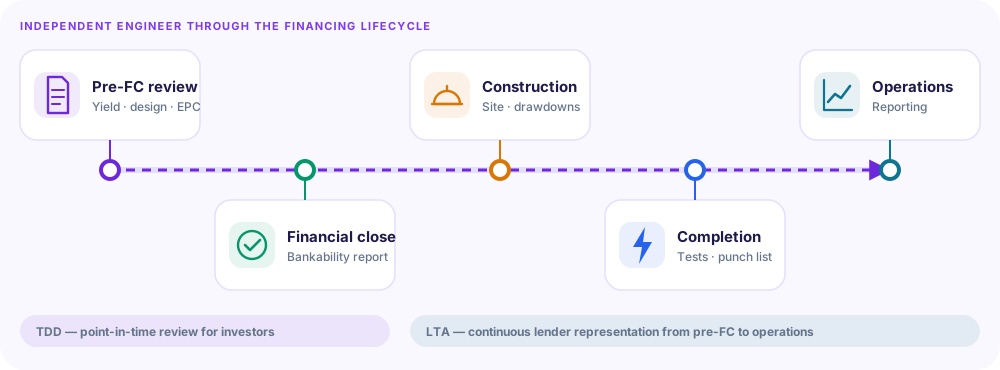
Finally, lenders rely on independent engineers to test all of the above. VESS provides technical due diligence, lender's technical advisory and construction monitoring so that financing decisions rest on verified technical evidence.
Frequently asked questions
What is a P90 energy yield?
P90 is the annual energy production expected to be exceeded with 90% probability. Lenders commonly size debt on P90 to protect against low-resource years.
Why do lenders require an independent engineer?
Independent engineers give lenders an unbiased view of technical risk, separate from the developer and EPC contractor who have commercial interests in the project.
How does ICV affect bankability in Oman?
In-Country Value commitments are often part of procurement and permitting. Clear ICV plans reduce compliance risk that could otherwise delay financing.